have you ever ever puzzled what your rights are as an artist? There's no clear-reduce textbook to talk to—however we're right here to support. Katarina Feder, a vice president at Artists Rights Society, is answering questions of all varieties about what kind of handle artists have—and don't have—over their work.
Do you've got a question of your personal? electronic mail [email protected] and it could actually get answered in an upcoming article.
the USA presidential campaign is in its closing stretch, and you recognize what that skill: famous musicians are suing politicians to stop them from the use of their songs on the crusade path. I've always puzzled, why are they allowed to do this? Why can't politicians use some thing song they desire?
You're correct to be a bit at a loss for words. an excellent copyright infringement case must demonstrate that the artist has misplaced business on account of the unauthorized use. however candidates operating for workplace aren't presupposed to be making funds off of the technique—so why should the musicians care?
The "why" turns into clearer for those who accept as true with the identities of the aggrieved events and the defendants: George W. Bush became sent a stop and desist by way of Tom Petty, Jackson Browne sued John McCain, David Bryne and the speakme Heads sued former Florida governor Charlie Christ. And, of path, who could overlook in regards to the time that the guys who did Eye of the Tiger sued Newt Gingrich? Chalk it as much as alterations of opinion in our fabulous American marketplace of ideas.
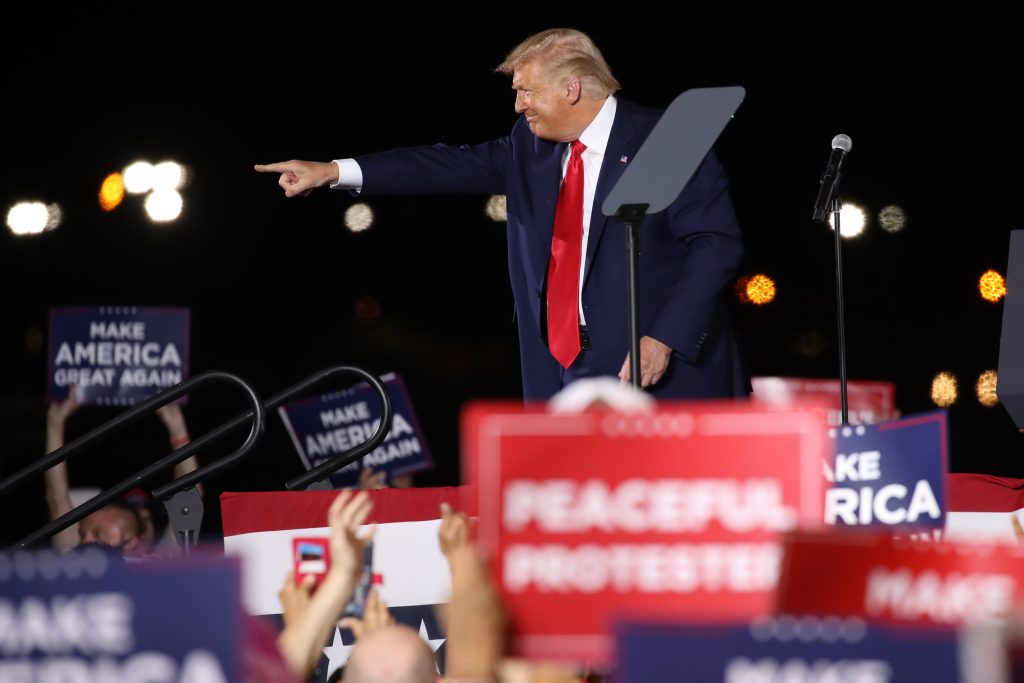
President Donald Trump speaks at a rally a day after he formally approved his birthday celebration's nomination at the Republican national convention on August 28, 2020. (photograph by way of Spencer Platt/Getty pictures)
The "how" is a controversy close to my coronary heart, because it includes collective rights agencies that are a whole lot like mine, Artist Rights Society. Three music-industry organizations called "performance Rights groups" (professionals) manage the rights for many track within the united states: the American Society of Composers, Authors and Publishers (ASCAP); Broadcast track, Inc (BMI); and SESAC Holdings, Inc.
These agencies have potent relationships with musicians and regularly make use of blanket agreements with venues like live performance halls and convention facilities—however the agreements tend to exclude political rallies, which require their own individual licenses.
in brief, musicians have a wide variety of easy methods to get politicians in drawback for playing their music at rallies devoid of permission. And due to the fact that here's fairly tons the most effective factor politicians basically get in crisis for this present day, I believe that's fascinating.
Being quarantined in our 500-square-foot apartment has satisfied my companion and i that we will live on anything, so we've decided to get married. She desires to do a prenup, and as an artist, I'm inclined to put anything in there about the rights to my artwork. Do I should be worried about these within the event of a divorce?
Congratulations! both on the wedding and on taking the in charge step of getting a prenuptial agreement. here at ARS, we believe that the best issue more sacred than the bond between a married couple is the one which exists between an artist and their intellectual property.
in contrast to in marriage, there isn't lots of bureaucracy involved with copyright: it's granted automatically to an artist following the advent of an art and in reality exists in the ether (except you wish to sue an illicit consumer for copyright infringement—that requires forms).
nevertheless, divorce lawyers have proven as adept at dissecting the ether as they are at dividing property. Take, as an instance, Da Vinci Code author Dan Brown, whose ex-spouse is seeking what she believes is her share of the creator's these days launched classical track album for little ones (he composed the songs some 30 years ago, earlier than he turned into married). Or trust "Peanuts" creator Charles M. Schultz, who ended up giving his first wife a whopping 27 percent of the business after their 1973 split.

"Peanuts" creator Charles Schulz. image by Roger Higgins. Courtesy of Wikimedia.
On a federal stage, copyright belongs only to the artist or creator, but things become complicated in US states, like California, with neighborhood property legal guidelines. In such states, most judges base their answer to the copyright query on an enchantment filed in 1987 related to the California divorce of Susan and Frederick worth. they had divorced five years previous, no longer long after Frederick published two books on minutiae for which the pair agreed to share royalties. In 1984, despite the fact, Frederick sued the makers of "Trivial Pursuit," alleging that they'd stolen questions from his book. Susan requested the court for half of anything else that Frederick gained.
Frederick misplaced the case (however that he made up one of the vital allegedly appropriated items of minutiae precisely to give protection to against this variety of theft: Columbo's first identify become by no means really published on the show). but in that 1987 appeal of her own separate case, the court become clear: Susan did indeed have declare to his copyright.
in keeping with the courtroom, it doesn't matter that Frederick on my own penned the trivialities books. "The concepts of group property legislations do not require joint or qualitatively equal spousal efforts or contributions in acquiring the property," the ruling brought up. All that matters is that the companion expended that effort all over the wedding.
This price case guided the 1992 divorce of George G. Rodridge, an artist from Louisiana, which is an additional group property state. In other words, counting on where you get married or divorced, anything you create all the way through holy matrimony may be up for grabs, copyright-smart. So except you're comfy with that, you'd more suitable say in any other case within the prenup.
I'm a clinical illustrator. A pair of lungs I drew within the early 2000s has somehow made its method onto a popular fb put up that calls COVID-19 a hoax. I'm more outraged in regards to the context than the appropriation. What recourse do I actually have?
leisure guaranteed: the lungs you drew are, in the eyes of the legislations, simply as blanketed as Picasso's take on the violin.
The grownup who posted your illustration seemingly isn't making any money off of it, so a lawsuit could be greater obstacle than it's price. however whereas fb could be, through its personal admission, absolutely untrustworthy when it comes to facts, they're in reality just as beneficial at addressing advantage copyright infringement as they're at radicalizing your aunt.
If the rest, they're overzealous. When the pandemic all started, the Santa Barbara classical music trio Camerata Pacifica had been advised that they couldn't put up movies of their previous performances as a result of fb's bots discovered they had violated Mozart's copyright. (just a reminder: copyright lasts for the creator's lifetime plus an further 70 years, and Mozart died in 1791).
Your top-rated bet, then, is to go appropriate to facebook, which permits clients to report expertise copyright infringements here in what is known as a "takedown word" beneath the Digital Millennium Copyright Act. Godspeed—and please take credit score for a number of of the images on these vaccine posts while you're there.
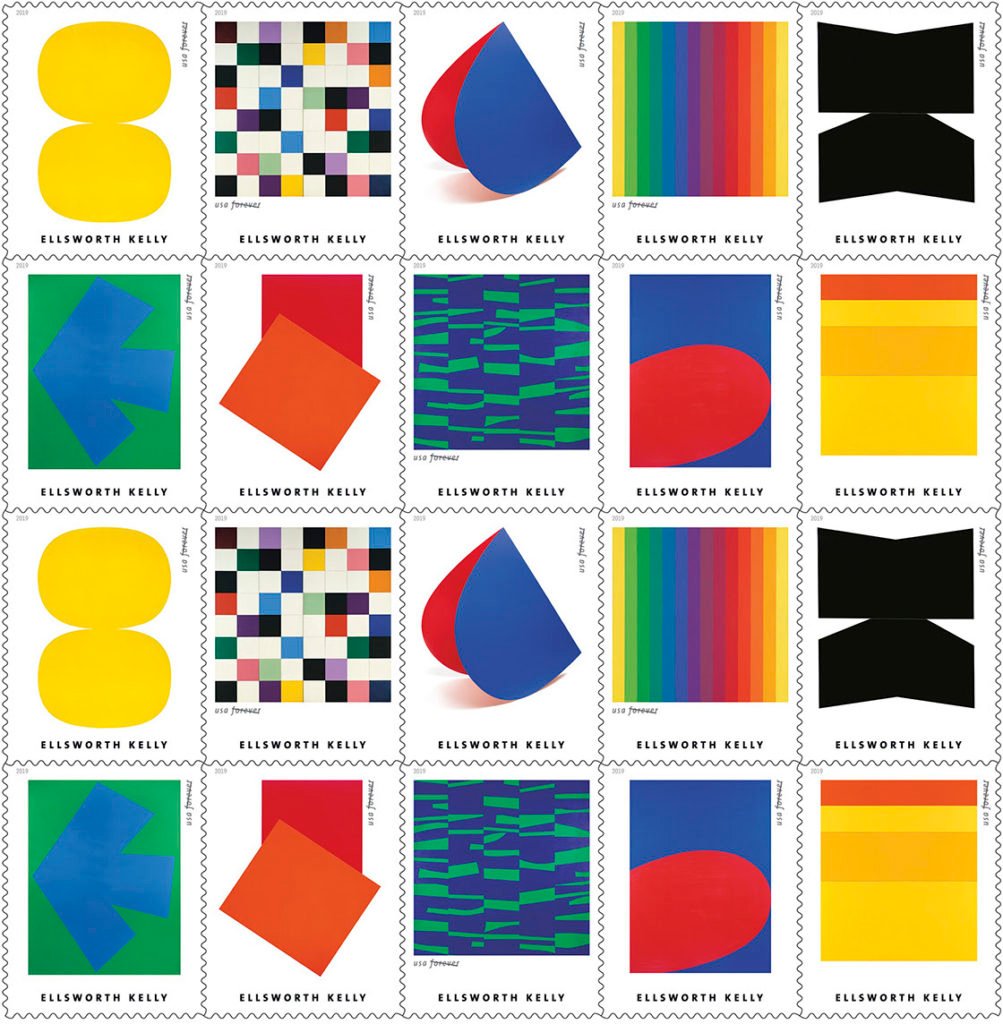
Ellsworth Kelly's perpetually Stamps. Courtesy of the USPS.
shop our submit workplaces! however what about our stamps? I remember there become a stupendous Ellsworth Kelly collection launched a couple of years ago. How does an paintings make its means onto a stamp? Does the Kelly estate get a chunk of that 55 cents?
Being asked to design a stamp is regarded an honor, a good deal the style it used to be an honor to be asked to give an art for an American embassy. And the U.S. Postal service began using paintings on stamps long earlier than the term "artist collaboration" grew to become everyday.
the primary artwork licensed for an American stamp seemingly dates again to the 1869 Pictorial concern. This group of stamps covered recreations of John Vanderlyn's landing of Columbus (1842–forty seven) and John Trumbull's announcement of Independence (1818). for the reason that the mid-nineteenth century, the Postal provider has branched out from reproductions of works by using lifeless white guys who painted useless white guys to stamps that includes the handiwork of Mary Cassatt, Isamu Noguchi, and, most recently, Ruth Asawa.
Such collaborations are made with the approval of the artist or estate. If permission isn't granted and the publish workplace goes forward with the stamp anyway, it can occasionally be rather lucrative for the artist to sue. consider two recent circumstances by which the USPS handled the copyright clearances like a forgotten kit.
the primary considerations the Korean struggle Veterans Memorial in Washington, DC, whose sculptor become awarded more than $500,000, or 10 p.c of the income from the stamp that featured the design. The 2nd case revolves round a picture of the Statue of Liberty—except it wasn't the specific Statue of Liberty, but the "sexier" duplicate on the big apple-ny hotel in Las Vegas. The dressmaker of that version, a guy named Robert S. Davidson, became quickly awarded $three.5 million.
these are the exceptions that prove the guideline. Let's hear it for the USPS! Its collaborations with artists doubtless represent a considerable component of the art that the majority americans are able to see in a given year. Vote!
follow artnet information on facebook:are looking to dwell ahead of the paintings world? Subscribe to our publication to get the breaking information, eye-opening interviews, and incisive critical takes that force the dialog ahead.


No comments:
Post a Comment