CNA team of workers, Jul 10, 2020 / 10:35 pm (CNA).-
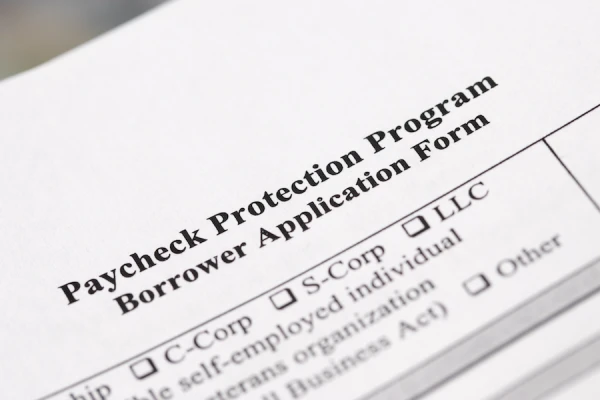
The U.S. bishops on Friday defended using the federal Paycheck insurance policy application by Catholic parishes, hospitals, colleges, dioceses, and social service organizations, after a document from the linked Press referred to the government had given "special consideration" to religion agencies within the personal loan program and characterized Catholic participation within the coronavirus relief application as an "aggressive pursuit of funds."
"The Paycheck coverage software become designed to offer protection to the roles of american citizens from all walks of existence, regardless of whether or not they work for for-income or non-income employers, faith-based mostly or secular," Archbishop Paul Coakley, chairman of the U.S. bishops' convention committee on home justice and human construction stated in a July 10 statement.
"The Catholic Church is the greatest non-governmental company of social capabilities in the u.s.. every yr, our parishes, colleges and ministries serve thousands and thousands of individuals in want, regardless of race, ethnicity or faith. the unconventional coronavirus most effective intensified the wants of the people we serve and the demand for our ministries. The loans we utilized for enabled our basic ministries to proceed to characteristic in a time of national emergency."
"moreover, shutdown orders and economic fallout associated with the virus have affected everyone, including the hundreds of Catholic ministries — churches, faculties, healthcare and social services — that make use of about 1 million people within the u.s.," Coakley brought.
"These loans have been a vital lifeline to preserve lots of of heaps of personnel on payroll, be certain households hold their health insurance, and enable lay employees to proceed serving their brothers and sisters right through this crisis."
The federal loan software is a $669-billion initiative that allows for entities to attain low-interest loans that can also be forgiven if the money goes basically to cowl payroll charges, and to keep people employed who're in danger of dropping their jobs. while more than 4.9 million loans have been accepted up to now, more than $one hundred thirty billion remains accessible to competencies borrowers.
earlier this week, information become released via the govt that revealed the identities of many, however not all mortgage individuals. loan recipients blanketed deliberate Parenthood affiliates, a large number of corporations owned by way of state and federal lawmakers, the publisher of the national Enquirer, the libertarian Ayn Rand Institute, and different corporations that have raised eyebrows or been subject to criticism.
nonetheless, officers with the federal Small enterprise affiliation pointed out that the software become designed to retain americans employed, inspite of their industry or service provider, and that the SBA will exercise oversight to make certain money had been now not borrowed below false pretenses.
If borrowers can't demonstrate that at the least 60 percent of borrowed money have been used for payroll-linked charges, then the terms of the loans would require their compensation.
The July 9 associated Press file referred to that Catholic corporations borrowed between $1.four and $three.5 billion, and mentioned that as a minimum 407,900 jobs were saved via these loans. at the high end of the linked Press estimate, Catholic institutional borrowing would signify .5% of funds allotted to the mortgage program. And if $3.5 billion become really borrowed, the can charge for each job saved throughout the loans would volume to $8580.
In can also, CBS information mentioned that 12,000-13,000 of the 17,000 Catholic parishes within the U.S. had utilized for the loans, and 9,000 had already bought them.
The July 9 associated Press story noted that the Catholic Church in the U.S. used an "exemption from federal guidelines" in an effort to "amass as a minimum $1.four billion in taxpayer-backed coronavirus aid" through its participation within the federal program.
The record said that Catholic entities gained this "exception" to the Small business association's eligibility guidelines through lobbying efforts, citing an April report from Catholic information carrier.
That Catholic news provider record observed that Catholic lobbyists worked, within the week the legislation creating the software changed into in reality handed, to make certain that as rules were devised through department of Treasury officials, that Catholic entities civilly diverse from each different would not be regarded as one entity, which may place the consolidated entities above a 500-employee eligibility cap.
within the Church's canon law, parishes are diverse felony entities from every other and from dioceses, and whereas diocesan bishops pastime legislative and judicial authority over parishes, parishes do not represent subsidiaries of dioceses. Nor do affiliated entities like Catholic Charities, Catholic colleges and universities, or Catholic hospitals, which are often overseen by means of lay boards on which bishops often have handiest average balloting membership, if that.
The Catholic Church is an internet of companies related via faith, mission, sacraments, and oversight, but these businesses are not uniformly administered as subsidiaries or below the direct handle of native bishops.
whereas parishes commonly pay annual expenses to dioceses, the dollars of different canonical entities may no longer be permissibly commingled, and canon law requires that the civil constructions of parishes, dioceses, and other Catholic entities replicate their canonical truth.
even so, the complicated organizational structure of the Catholic Church made it viable that a few Catholic entities within the equal region might be considered by the SBA as one entity. the effort of the USCCB lobbyists was to make certain that wouldn't be the case, the Catholic news carrier document explained.
That effort changed into a hit.
An April 3 FAQ document from the SBA explained that the ordinary personal loan rules given that if faith-based mostly companies had an affiliation concerning "religious beliefs about church authority or inner charter, or since the prison, economic, or other structural relationships between your corporation and other groups replicate an expression of such beliefs," they'd qualify for an exemption to rules that would primarily count "affiliated" companies as one entity for purposes eligibility determination.
despite the fact, religion-based companies "affiliated with other businesses totally for non-non secular motives, akin to administrative convenience…would be field to the affiliation guidelines," the SBA defined.
in the u.s., each parishes and dioceses are facing serious economic shortfalls and in Rome, the Vatican has run massive budget deficits for years. while the Catholic Church has belongings of creative, cultural, and ancient price, these don't seem to be readily liquidated, and with few exceptions, Catholic entities worldwide were dealing with a significant money crunch for years.
In his commentary, Coakley mentioned that "more than a hundred Catholic schools have announced that they plan to close, with lots of extra dealing with an doubtful future. agencies, hospitals, faculties, and church buildings all across the nation are dealing with lots of the accurate equal problems."
"we are able to continue advocating for all and sundry negatively plagued by this bad pandemic, praying for all the ailing, for all who have died and are in mourning, and particularly the negative and inclined at the moment of top notch need."

if you cost the news and views Catholic World report gives, please consider donating to aid our efforts. Your contribution will help us continue to make CWR purchasable to all readers worldwide without charge, and not using a subscription. thank you in your generosity!
click on here for more suggestions on donating to CWR. click on here to sign up for our publication.


No comments:
Post a Comment